

Phoenix homeowners ask this all the time: do sunscreens actually make a difference, or are they just another add-on that sounds good in theory?
The honest answer is yes, sunscreens can absolutely help reduce heat gain in Phoenix. They are not the same as air conditioning, and they do not “stop” heat completely, but they do reduce how much direct sun reaches your glass. In a climate where solar heat through windows can put real strain on indoor comfort and cooling costs, that matters. The U.S. Department of Energy notes that window attachments that reduce solar heat gain can lower cooling energy use, and exterior-mounted options are generally more effective than interior ones because they block sunlight before it enters through the glass.
That is the key idea to understand: in Phoenix, the battle is often won outside the glass, not inside it.
So, do sunscreens really block heat?
Yes, but it is more accurate to say they reduce solar heat gain rather than completely block heat. Sunscreens work by filtering and reflecting part of the sun’s energy before it hits your windows directly. That means less radiant heat entering your home, less glare, and less stress on rooms that get blasted by afternoon sun.
This is especially valuable in Phoenix because of the city’s extreme sun exposure. Phoenix gets around 300 sunny days a year, which means west-facing and south-facing windows can turn certain rooms into hot spots for much of the year.
If you have ever noticed one bedroom, loft, or living room getting significantly warmer than the rest of the house in the afternoon, sunscreens are often one of the first upgrades worth considering.
What sunscreens can and cannot do
Sunscreens can help by:
- reducing direct solar heat coming through the glass
- lowering glare
- helping protect floors, furniture, and interiors from UV exposure
- improving comfort near windows
- supporting lower cooling demand during hot months
They do not turn an old inefficient window into a brand-new high-performance replacement. If your windows are leaking air, have failed seals, or are outdated single-pane units, sunscreens will help, but they may not solve the full problem on their own. In those cases, window replacement may be the better long-term move, especially if comfort and energy efficiency are both priorities. Energy-efficient windows are designed to reduce heat gain and cooling demand more directly.
So the best answer is usually this:
- if your windows are structurally fine but rooms get too much sun, sunscreens are often a smart, cost-effective upgrade
- if the windows themselves are old or underperforming, replacement windows may be the better investment
- in some homes, the best result comes from combining both
What are my options in Phoenix?
Not every home needs the same solution. The right option depends on sun exposure, window size, orientation, appearance preferences, and budget.
1. Exterior sunscreens / shade screens
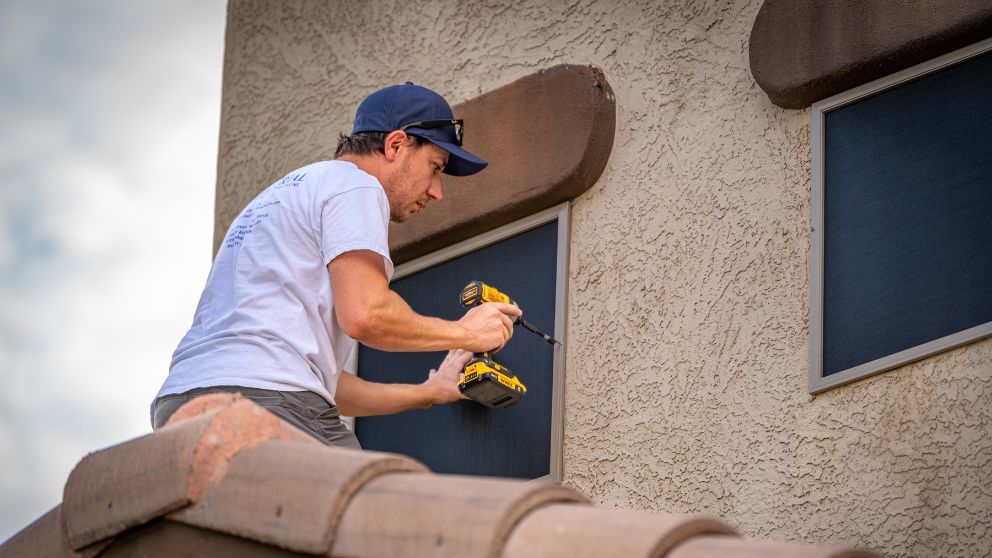
This is the option most people mean when they ask about sunscreens. These are custom-fitted mesh screens installed on the exterior of the window. Because they stop a large portion of sunlight before it reaches the glass, they are one of the more effective ways to reduce solar heat gain. The Department of Energy’s research on window attachments supports the general principle that exterior solutions tend to outperform interior ones for cooling reduction.
These are usually a great fit for:
- west-facing windows
- south-facing windows
- bedrooms and living rooms that overheat in the afternoon
- homeowners who want a practical solution without replacing every window
2. Interior blinds or shades
Interior blinds help with glare and privacy and can contribute to comfort, but they usually do not block heat as effectively as an exterior screen because the sun has already passed through the glass by the time the blind intercepts it. That is why many Phoenix homeowners use blinds for light control and privacy, while relying on exterior sun protection for stronger heat reduction. DOE materials on window attachments make this exterior-versus-interior performance difference clear.
3. Plantation shutters
Plantation shutters are often chosen more for appearance, privacy, and indoor light control. They can help with comfort, but they are usually not the first recommendation when the main goal is to reduce heavy Phoenix sun before it enters the home. They are a premium interior solution and are often selected for design appeal as much as function.
4. Window replacement
If your windows are older, drafty, or inefficient, replacing them with energy-efficient units may offer a bigger long-term improvement than adding a sunscreen alone. Newer windows can reduce heat transfer, improve comfort, and upgrade the home’s appearance at the same time. Imperial Windows and Sunscreens also highlights energy-efficient replacement windows and shade screens as separate but complementary solutions for Arizona homes.
What’s the price at install?
This is the part most homeowners care about most, and the honest answer is that installation pricing depends on window count, size, access, frame type, and the screen material selected.
That said, general market pricing sources show that solar screens often land around $80 to $280 per window, with an average around $160 per window, while larger whole-home projects may reduce the per-window cost. Labor is commonly included in the installed number, but industry estimates place labor around $35 to $90 per window depending on complexity.
For small jobs, homeowners may also run into a minimum service charge. One Phoenix-area review referenced a $250 minimum for a small two-window job, which is common in service businesses where measuring, fabrication, and installation still require a trip regardless of size.
So as a practical installed pricing guide in Phoenix, homeowners can often expect something like this:
- Single or very small jobs: often subject to a minimum trip or project charge
- Typical per-window installed pricing: roughly in the low hundreds per window depending on size and material
- Whole-home installs: often better value per opening than doing one or two screens at a time
It is also worth noting that Imperial Windows and Sunscreens states that, as an authorized SRP participating contractor, it helps qualifying customers pursue shade screen rebates of $1.00 per square foot, which can help reduce final out-of-pocket cost for eligible projects.
Is it worth the money?
For many Phoenix homes, yes.
If you have one or two rooms that get hammered by afternoon sun, a custom sunscreen installation can be one of the more affordable ways to improve comfort without committing to a full window replacement project. The upfront cost is usually much lower than replacing all windows, and the comfort improvement can be noticeable quickly, especially on west-facing glass.
Where sunscreens tend to be most worth it:
- rooms that become uncomfortable in late afternoon
- homes with large exposed windows
- homeowners trying to reduce glare and UV exposure
- households wanting a lower-cost step before full replacement windows
Where replacement windows may make more sense:
- existing windows are old or failing
- you feel drafts or air leakage
- glass performance is poor year-round
- you want a bigger overall upgrade in efficiency, comfort, and appearance
The best approach for Phoenix homeowners
In a desert climate, there is no one-size-fits-all answer. The right solution depends on what is causing the discomfort in the first place.
If the main issue is intense sun exposure, sunscreens are often a smart first step. If the main issue is outdated or inefficient windows, replacement may be the better long-term move. And if you want the strongest overall result, combining
energy-efficient windows with exterior sunscreens can create a more complete comfort strategy.
The most important thing is to look at your home window by window. Not every opening needs the same treatment.
Final thoughts
So, do sunscreens actually block heat in Phoenix?
Yes, they can make a meaningful difference by reducing solar heat gain before it comes through the glass. In a city with intense sun, long cooling seasons, and rooms that can heat up fast, they are a practical option worth considering. They are not magic, and they are not a full substitute for efficient windows when the window itself is the problem, but they are often one of the most cost-effective upgrades for improving comfort.
And when installed correctly, custom sunscreens can do more than cut glare. They can make hot rooms more usable, reduce strain on your cooling system, and help your home feel more comfortable during the months when Phoenix heat is at its worst.
Ready to make your home cooler and more comfortable? Contact Imperial Windows and Sunscreens today for a free estimate on custom sunscreen installation. We’ll help you explore the right options for your home, your sun exposure, and your budget.